The Genesis of Glen McMahon: Unpacking the True Story Behind *War Machine*
From the moment Netflix released David Michôd's *War Machine* in 2017, audiences have been captivated by its unique blend of gritty war drama and biting satire. Starring Brad Pitt in a memorable, exaggerated role, the film plunges viewers into the chaotic world of America's war in Afghanistan. One of the most frequently asked questions surrounding this compelling movie is, Is War Machine Based On A True Story? The answer is a resounding yes, though the film expertly navigates the fine line between historical fact and satirical embellishment, offering a nuanced and often absurd portrayal of real-life events and figures.
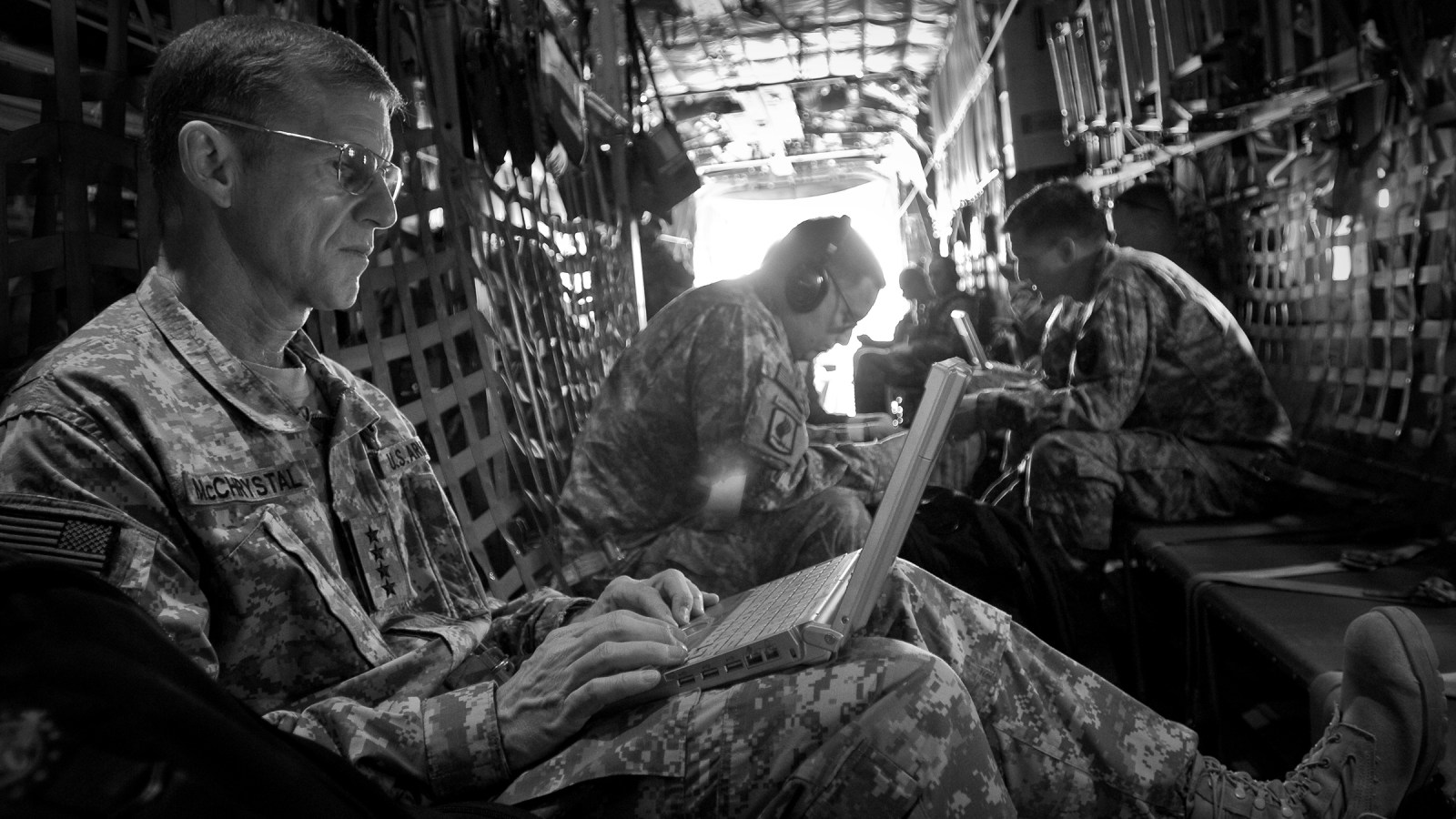
At its core, *War Machine* draws its inspiration from Michael Hastings' provocative non-fiction book, The Operators: The Wild and Terrifying Inside Story of America's War in Afghanistan. Hastings, a fearless journalist for Rolling Stone, embarked on a perilous journey embedded with General Stanley McChrystal, the real-life counterpart to Brad Pitt's General Glen McMahon. McChrystal was a highly decorated four-star general, renowned for his unconventional approach and intense dedication, tasked with turning the tide of the war in Afghanistan.
Hastings' time with McChrystal and his inner circle proved to be a pivotal moment for both the general's career and the public's understanding of the conflict. The resulting 2010 Rolling Stone article, "The Runaway General," detailed candid and often disparaging remarks made by McChrystal and his team about the Obama administration, Vice President Joe Biden, and other diplomatic figures. This explosive piece pulled back the curtain on the frustrations and perceived slights within the military leadership, ultimately leading to President Obama's swift decision to relieve General McChrystal of his command. This dramatic downfall, meticulously documented by Hastings, forms the factual bedrock upon which *War Machine* builds its narrative.
Michael Hastings and the Unveiling of Truth
Michael Hastings' role in this saga cannot be overstated. His intrepid journalism wasn't just about reporting facts; it was about capturing the atmosphere, the personalities, and the unfiltered dialogue that defined a critical period in the Afghanistan war. Hastings managed to gain unprecedented access, and his ability to convey the raw, unvarnished truth of what he witnessed made his reporting incredibly impactful. The decision by McChrystal's team to speak so openly with a journalist, a move often deemed a significant breach of protocol, speaks volumes about the internal pressures and perhaps a sense of invincibility that permeated the general's camp.
For viewers interested in understanding the full scope of McChrystal's story and the journalistic process, Hastings' book provides an even deeper dive into the complexities and contradictions of modern warfare. It serves as a powerful testament to the importance of investigative journalism in holding power accountable and revealing the human elements behind grand geopolitical strategies.
Brad Pitt's Glen McMahon: Satire Personified or a Caricature Too Far?
One of the most striking aspects of *War Machine* is Brad Pitt's performance as General Glen McMahon. Pitt's portrayal is a masterclass in physical acting, defined by a peculiar, almost robotic gait, an intense stare, and a perpetually furrowed brow that conveys both unwavering determination and a hint of delusion. From the way he runs to the specific gestures of his hands, Pitt embodies a character that is undeniably an exaggeration of General Stanley McChrystal.
This deliberate over-the-top performance is where the film's satirical heart truly beats. McMahon is presented as a singular figure, almost a mythical warrior, disconnected from the political realities he must navigate. His obsession with running, his ascetic lifestyle, and his unshakeable belief in his own righteous cause are amplified to create a figure that borders on the absurd. While the real General McChrystal was known for his rigorous fitness regimen and intense focus, Pitt's McMahon takes these traits to their most exaggerated, almost comical, extreme.
The film doesn't stop with Pitt's character; it extends its satirical gaze to other prominent figures. Ben Kingsley's depiction of President Karzai, for instance, is another outright caricature, portraying the Afghan leader as aloof, disconnected, and more concerned with trivialities than the pressing matters of state. These exaggerated portrayals serve a crucial purpose: they highlight the inherent absurdities and disconnections that writer-director David Michôd perceived within the "war machine" itself.
The Satirical Lens: Exposing the Absurdity of War Leadership
The choice to employ satire for such a grave subject is a bold one. Satire, by its very nature, uses humor, irony, and exaggeration to critique society, politics, and power. In *War Machine*, this satirical lens allows the film to comment on the often-irrational elements of military bureaucracy, the disconnect between ground forces and political leadership, and the self-serving narratives that can arise within high-stakes environments. Pitt's performance, therefore, isn't just about impersonation; it's about embodying a critique.
For a deeper dive into the blend of reality and artistic interpretation, you might find this article insightful: War Machine: The True Story of General McChrystal and Satire.
Blurring Lines: Where Reality Ends and Satire Begins in *War Machine*
One of the intriguing challenges and triumphs of *War Machine* lies in its delicate balance between stark reality and overt satire. While McMahon and Karzai are clearly caricatures, many other characters in the film seem to operate in a more grounded, serious realm. This tonal ambiguity can initially be disorienting for viewers, making it difficult to discern the film's intended message or tone. Is it a serious critique of war, a dark comedy, or something in between?
David Michôd, known for his gritty realism in films like *Animal Kingdom*, deliberately crafts this blurred line. He doesn't aim for a straightforward historical retelling but rather an "absurdist war story" that uses humor and exaggeration to underscore deeper truths about the nature of conflict and leadership. The film's voiceover, which offers a cynical and detached perspective on the American military's pursuit of peace, further cements this satirical intent.
An interesting example of this blending is the film's portrayal of President Barack Obama. The scene depicting a brief encounter between McMahon and Obama, presented as a mere photo opportunity rather than substantive interaction, is a pointed commentary. It suggests a perceived lack of real engagement from the political echelon, reflecting the frustrations articulated in Hastings' original article. While subtly critical, it avoids turning Obama into a caricature, thus maintaining the film's overall tonal complexity.
Understanding this intentional blend is key to appreciating *War Machine*. It invites viewers to question not just the specific events depicted but also the broader narratives surrounding military interventions and political leadership. The film doesn't just ask, "Is War Machine Based On A True Story?" but also, "What does it mean to tell a true story through the lens of satire?"
Navigating True Stories in Film: Tips for Viewers
When approaching films like *War Machine*, which proudly declare themselves "based on a true story" yet employ significant creative license, here are a few tips to enhance your viewing experience and critical understanding:
- Do Your Research: Before or after watching, take a few minutes to look up the real events and people the film portrays. This context will illuminate where the filmmakers took liberties and why. For *War Machine*, reading about General McChrystal, Michael Hastings, and *The Operators* is invaluable.
- Understand the Filmmaker's Intent: Consider why the director and writers chose a particular style or genre (e.g., satire, drama, documentary). Michôd's choice of satire for *War Machine* signals a different kind of commentary than a purely historical drama.
- Recognize Artistic License: Filmmakers often condense timelines, create composite characters, or exaggerate traits to serve the narrative and thematic goals. This isn't necessarily a flaw but an artistic choice. The caricatures in *War Machine* are deliberate tools to critique the "war machine."
- Distinguish Fact from Interpretation: Be aware that a film is always an interpretation of events, filtered through the perspectives of its creators. Even factual elements are presented through a particular lens.
For more insights on discerning the factual elements from the artistic interpretations, explore: Fact or Satire? Unpacking War Machine's True War Story.
Conclusion
Ultimately, *War Machine* stands as a fascinating cinematic experiment that unequivocally answers the question, "Is War Machine Based On A True Story?" with a resounding yes, but with an important asterisk: it's a true story seen through a funhouse mirror of satire. Drawing directly from Michael Hastings' investigative work on General Stanley McChrystal, the film leverages Brad Pitt's iconic portrayal of Glen McMahon to deliver a biting critique of modern warfare, military leadership, and the often-absurd disconnect between policy and reality. It challenges viewers to look beyond the surface, to appreciate the power of satire in revealing uncomfortable truths, and to ponder the complexities of telling a "true story" when reality itself often borders on the unbelievable.